The Mirage of Liquidity
Picture this: You're scanning crypto exchanges for your next trade. You spot a Bitcoin options contract with $500 million in 24-hour volume. Your eyes light up. "This is it," you think. "Deep liquidity. I can get in and out easily."
You enter the trade. Everything looks perfect. But when you try to exit? The order book evaporates. Your $10,000 position slips by 15%. You just learned an expensive lesson: not all volume is real.
Welcome to the world of wash trading—the silent killer of retail traders in crypto derivatives.
What Is Wash Trading?
Wash trading is when someone (or a bot) buys and sells the same asset to themselves, creating the illusion of activity. It's like a store owner walking in and out of their own shop 1,000 times to make it look busy.
Why do exchanges do this?
- Rankings: Sites like CoinMarketCap rank exchanges by volume. Higher rank = more users = more fees.
- Perception: Traders avoid "dead" exchanges. Fake volume makes an exchange look alive.
- Token Listings: Projects need "minimum liquidity" to stay listed. Wash trading bots keep them above the threshold.
In options markets, it's even easier to fake. You can trade deep Out-of-the-Money (OTM) contracts that cost pennies but generate millions in "notional volume." It's the perfect crime—until you know what to look for.
The Golden Rule: Volume vs. Open Interest
Here's the secret weapon that separates smart traders from victims: Open Interest (OI).
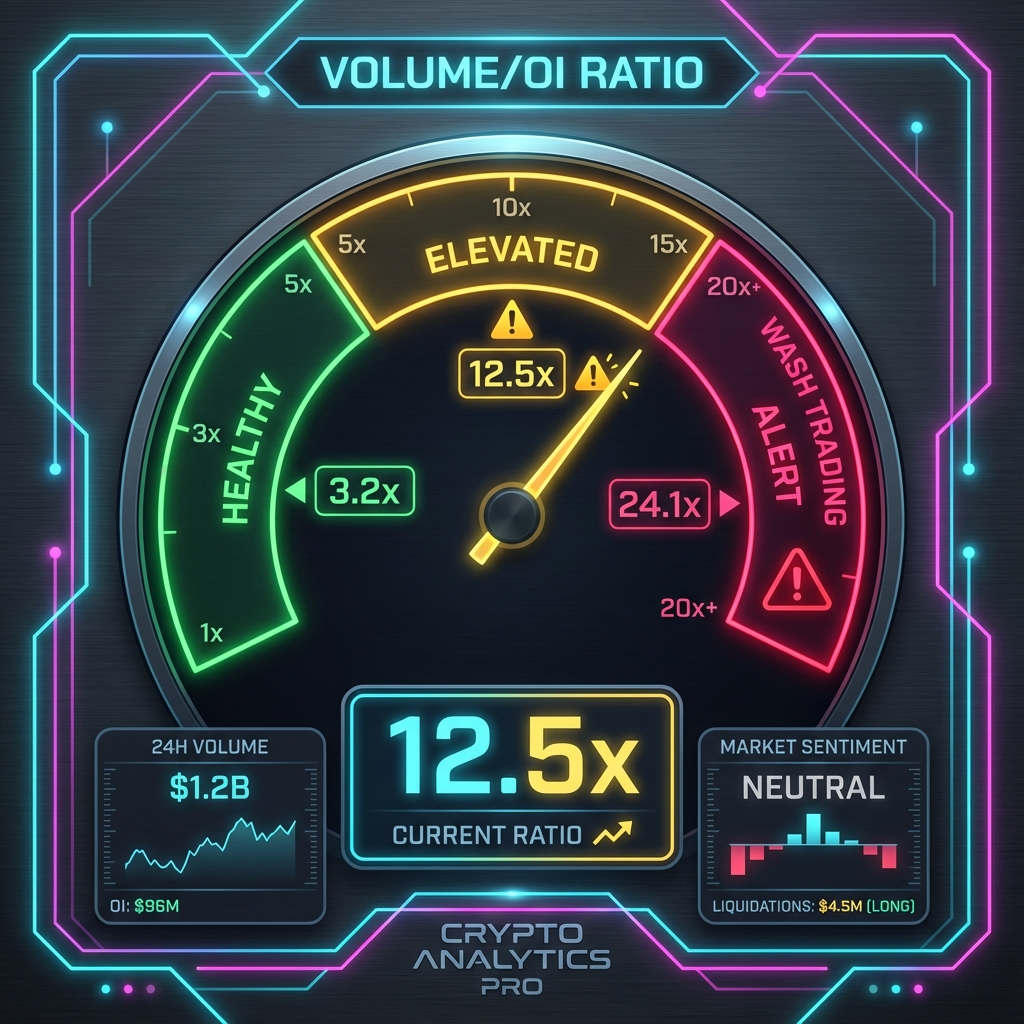
Volume is a flow metric. It resets every 24 hours. It measures activity.
Open Interest is a stock metric. It shows how many contracts are currently held. It measures commitment.
The difference is critical: Faking volume is cheap. Faking Open Interest is expensive because it requires locking up real margin collateral.
The Three Market States
By comparing volume and OI trends, you can diagnose market health instantly:
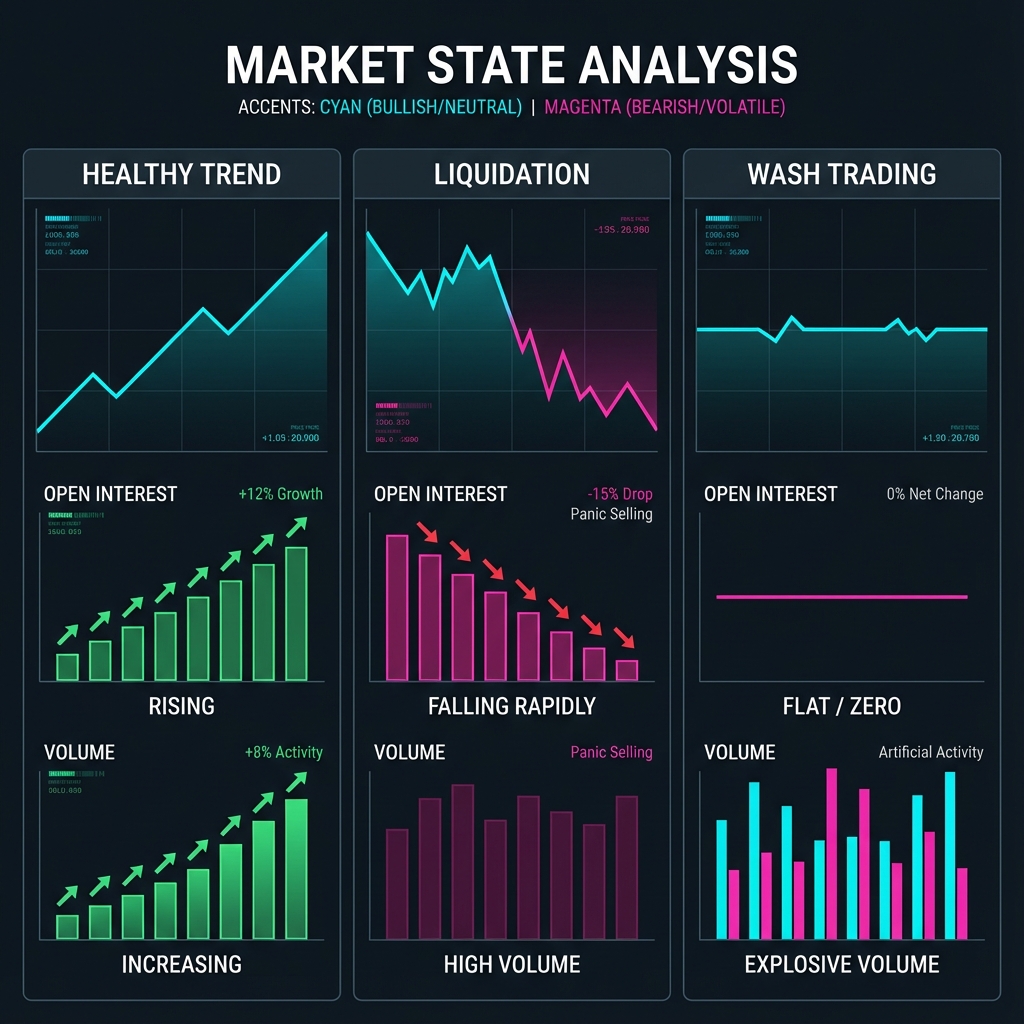
1. Healthy Trend (✅ Safe)
- Volume: Rising ⬆
- Open Interest: Rising ⬆
- Diagnosis: New money entering. Traders are opening positions and holding them. This confirms trend strength.
2. Liquidation / Covering (⚠️ Caution)
- Volume: Rising ⬆
- Open Interest: Falling ⬇
- Diagnosis: Money leaving. Traders are closing positions. High volume from exits, not entries. Trend is weakening.
3. Wash Trading (❌ DANGER)
- Volume: Exploding ⬆⬆⬆
- Open Interest: Flat or Near Zero ➡
- Diagnosis: The churn. Massive activity with zero capital commitment. Bots trading back and forth. This is the trap.
Red Flag #1: The "Ghost Volume" Anomaly
Wash traders love Deep OTM options because they're capital efficient. Trading a $200,000 Bitcoin Call (when BTC is at $95,000) costs almost nothing in premium, but it generates the full notional value in volume stats.
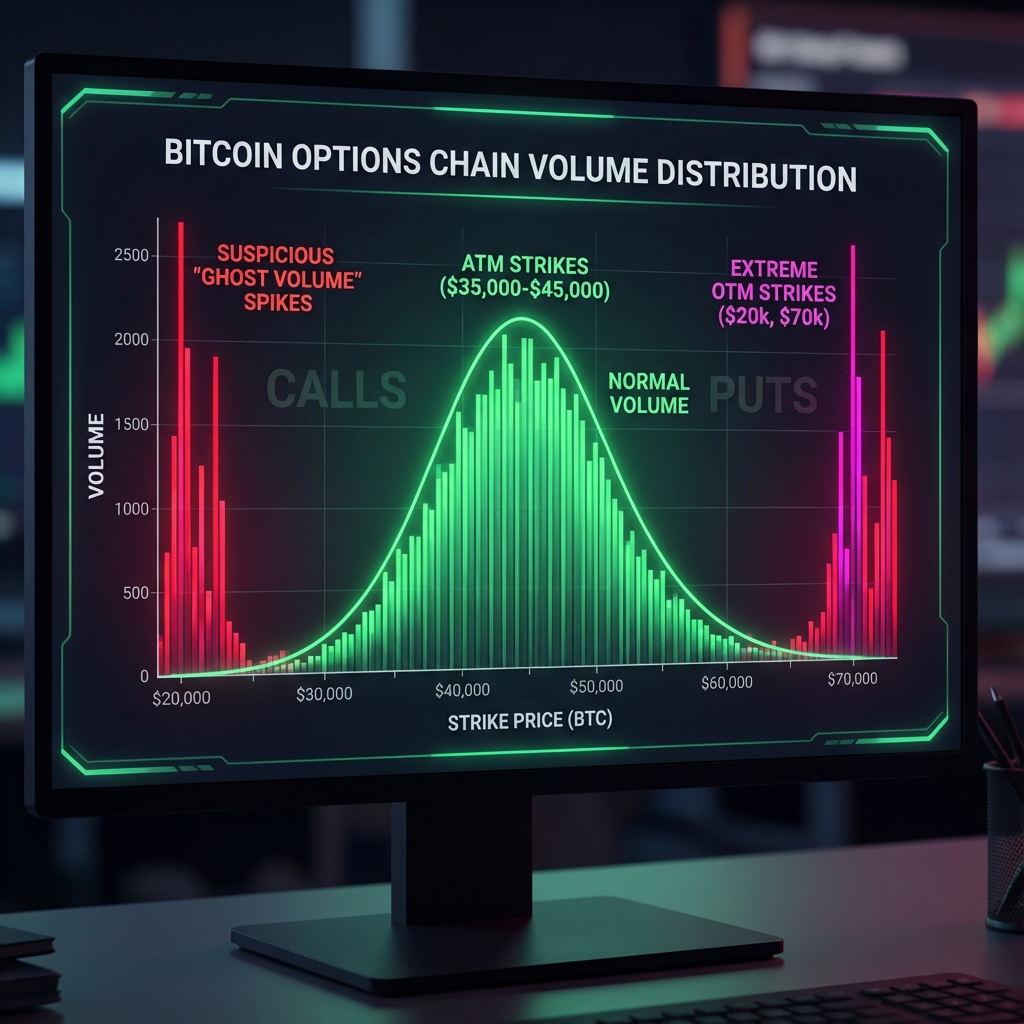
What to look for:
A healthy options chain follows a bell curve—most volume is At-The-Money (ATM). If you see huge spikes at the extreme tails (strikes that will never hit), that's your red flag.
Red Flag #2: The "Barcode" Pattern
Real markets are messy. Human behavior is erratic. Bot behavior? Robotic.
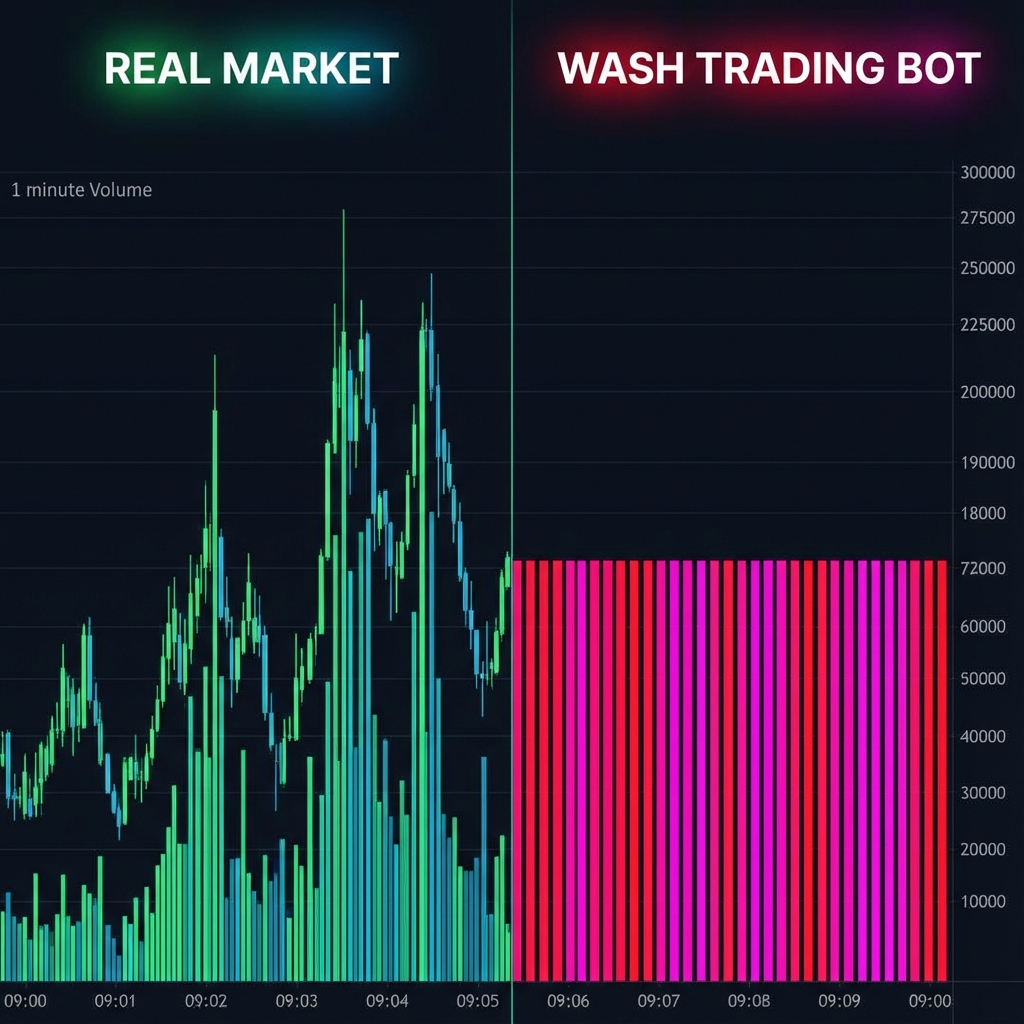
The Test: Look at the 1-minute volume chart. Does it show:
- Natural volatility: Spikes, dips, waves (✅ Real)
- Perfect flatness: Exactly 100 contracts every minute for 3 hours (❌ Bot)
If the chart looks like a barcode scanner, it's a script. Real volume comes in waves; fake volume looks like a production line.
Red Flag #3: The Spread Mismatch
Here's a paradox: If an exchange reports $1 billion in daily volume, the bid-ask spread should be tight. Why? Because arbitrageurs compete for fills in liquid markets.
The Red Flag: High volume + Wide spread = Contradiction.
Example:
- Exchange claims: "$500M volume"
- Bid: $100 / Ask: $120 (20% spread)
- Reality: That volume is internalized between whitelisted bots. It never touches the public order book.
How to Protect Yourself
Trading on a wash-heavy exchange exposes you to two catastrophic risks:
1. Slippage Risk: You can't exit at the displayed price. The "liquidity" was a mirage.
2. Liquidation Cascades: During volatility, phantom liquidity evaporates. Your stop-loss becomes a market order into a void.
The Blockskew Standard:
- ✅ Always check Open Interest alongside volume
- ✅ Verify the bid-ask spread matches the claimed liquidity
- ✅ Avoid exchanges with "barcode" volume patterns
- ✅ Prioritize regulated venues (CME) or high-integrity platforms (Deribit)
The Future: Automated Detection
At Blockskew, we're building the tools to automate these checks. Our upcoming "True-Metrics" update will provide:
- Wash Score: A 0-100 rating for every exchange and instrument
- OI/Volume Alerts: Real-time flags when ratios enter danger zones
- Ghost Volume Filter: Toggle to remove Deep OTM noise from charts
Until then, skepticism is your best defense. In crypto, if the volume looks too good to be true, it probably is.
Conclusion: Trade Smart, Not Blind
The crypto derivatives market is maturing, but it's still the Wild West in many corners. Wash trading isn't going away—it's too profitable for bad actors. But armed with the right knowledge, you can avoid the traps.
Remember: Volume is vanity. Open Interest is sanity.
Don't be the liquidity. Be the hunter.