The Hidden Force Behind Bitcoin's Options Market
When you look at Bitcoin's options market, you're not just seeing traders making directional bets. You're seeing the fingerprints of an entire industry trying to survive.
Bitcoin miners—the people running warehouses full of ASICs—have a problem that most traders don't think about: they can't just hold.
Every month, they have bills to pay. Electricity. Rent. Hardware maintenance. Cooling systems. These costs don't care if Bitcoin is pumping or dumping. They're due regardless.
And that creates a structural force in the options market that most retail traders completely miss.
The Miner's Dilemma: Why They Can't Just HODL
Let's break down what it actually costs to mine Bitcoin.
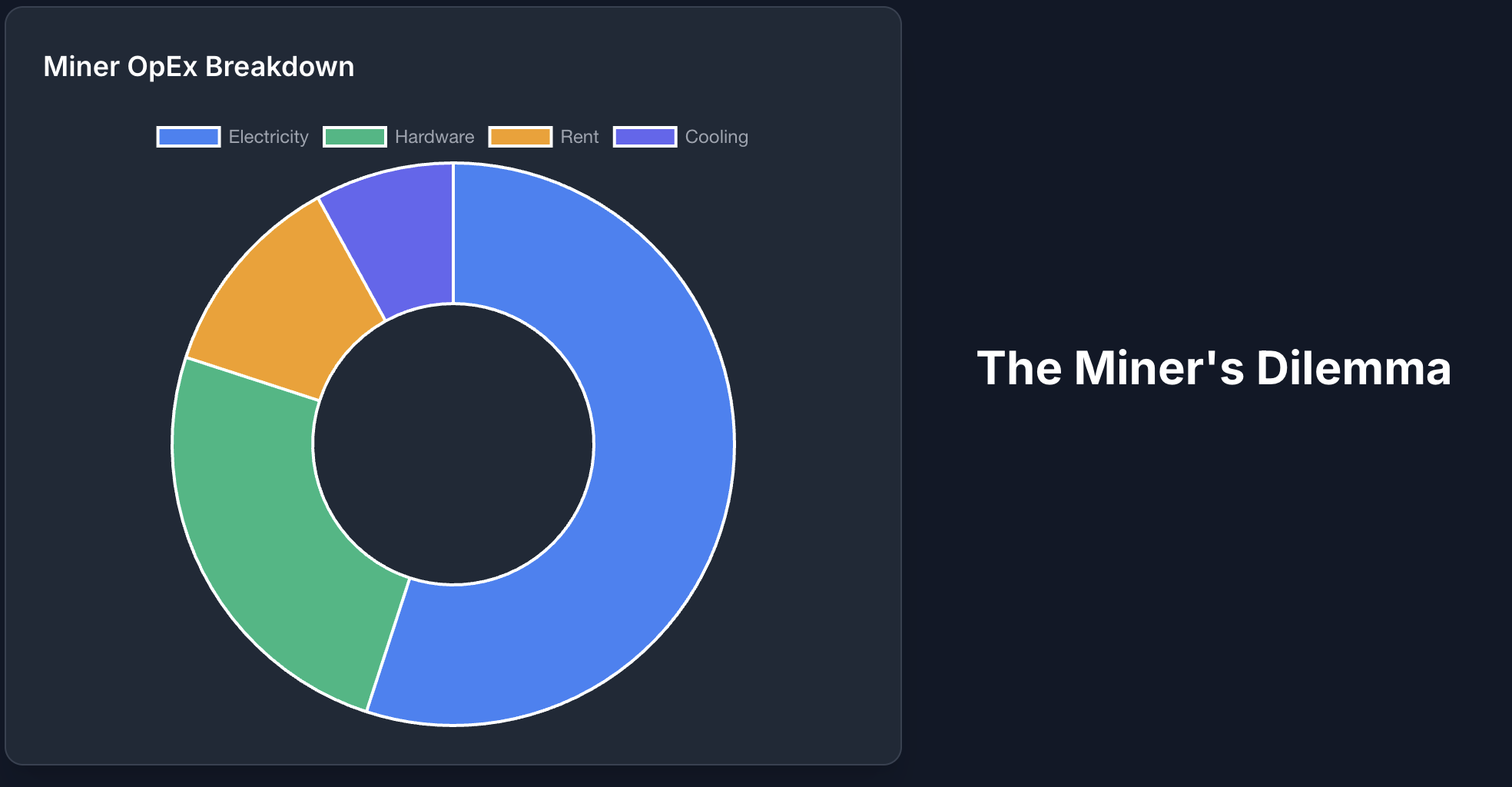
Look at that breakdown. 55% of a miner's costs are electricity. That's not a one-time expense—it's recurring, monthly, relentless.
When Bitcoin's price is high, this is fine. Miners are profitable, they pay their bills, everyone's happy.
But when Bitcoin's price drops while their costs stay the same? That's when things get dangerous.
Imagine you're running a mining operation. You have $500,000 in monthly electricity bills. Bitcoin is at $50,000, and you're profitable. But what if Bitcoin drops to $30,000?
Suddenly, you're operating at a loss. Every Bitcoin you mine costs more to produce than it's worth on the market.
This is the Breakeven Trap. And it's why miners can't just HODL like retail investors.
The Hash Rate Squeeze
Here's where it gets worse.
Mining difficulty adjusts based on total network hash rate. When more miners come online (because Bitcoin's price is high and mining is profitable), the hash rate increases. This makes mining harder for everyone.
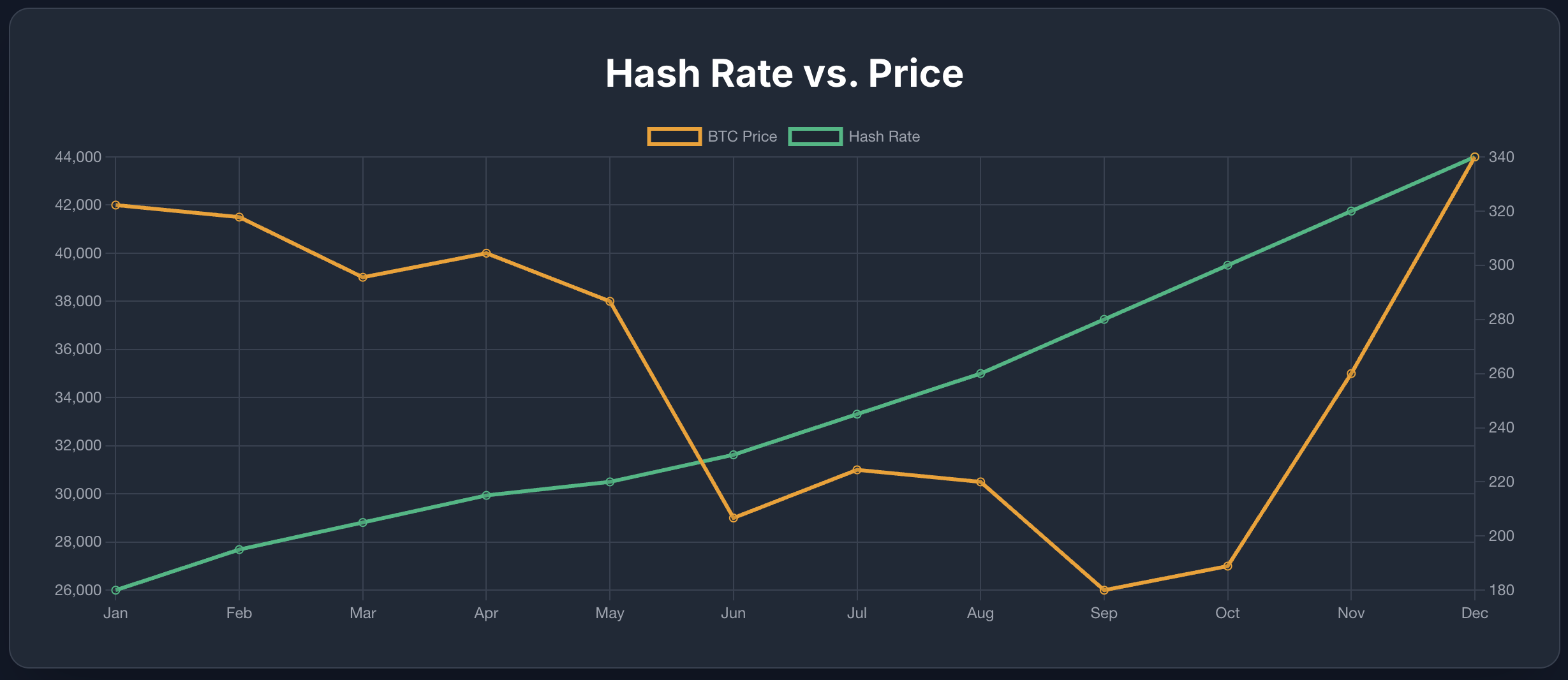
Look at this chart carefully. See what happened in the middle of the year?
Hash rate (green line) kept climbing while Bitcoin's price (orange line) dropped. This is a margin compression event.
More competition + lower prices = miners getting squeezed.
And when miners get squeezed, they do something that ripples through the entire options market: they hedge.
How Miners Hedge: The Put Option Strategy
Here's the trade that miners make when they're worried about price drops:
Step 1: Identify the Risk
A miner looks at their production cost. Let's say it's $35,000 per Bitcoin. They're currently profitable at $45,000, but they're worried about a drop.
Step 2: Buy Put Options
They buy 3-month or 6-month Put options at a $40,000 strike price. This gives them the right to sell Bitcoin at $40,000, no matter how low the market goes.
If Bitcoin drops to $30,000, their Put options explode in value, offsetting the loss on their mining revenue.
Step 3: Lock in a Floor
By paying a premium for these Puts, they've effectively locked in a minimum sell price. Even if Bitcoin crashes, they're protected.
This is insurance. And just like car insurance, you pay a premium to protect against catastrophic loss.
The Market Impact: Why Put Skew Exists
Now here's where it gets interesting for traders.
When miners (and other institutional players) buy massive amounts of Put options, it creates skew in the options market.
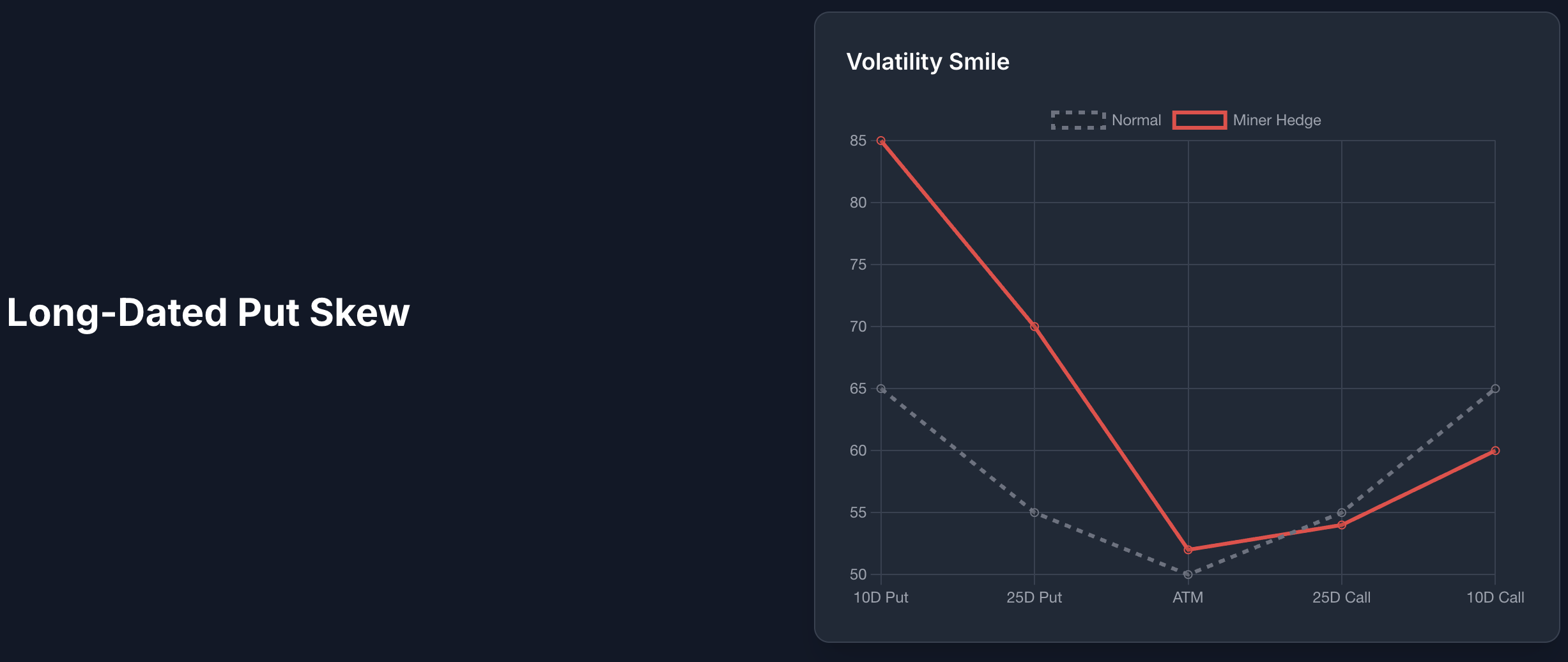
Look at the red line. That's what the volatility curve looks like when miners are aggressively hedging.
Notice how the left side (Puts) is much higher than the right side (Calls)? That's the skew.
In a "normal" market (gray dashed line), the volatility smile is symmetric. Both Puts and Calls have similar implied volatility.
But when miners flood the market with Put buying, they drive up the price of Puts relative to Calls. This creates the "smirk"—a volatility curve that's tilted to the downside.
What This Means for Traders
If you're trading Bitcoin options and you don't understand miner hedging, you're missing a huge piece of the puzzle.
1. Put Skew Is a Fear Indicator
When Put skew is elevated (especially on 3-6 month expirations), it means miners are worried. They're paying up for protection.
Historically, extreme Put skew has marked local bottoms. When miners are most scared, the market is often near a turning point.
2. Selling Puts Can Be Profitable
If you believe Bitcoin won't crash, you can sell Puts to miners and collect the inflated premium they're willing to pay.
This is a contrarian trade. You're betting that miner fear is overblown.
3. Watch the Hash Rate
Rising hash rate + flat price = miner stress = increased Put buying.
If you see hash rate climbing while Bitcoin's price stagnates, expect Put skew to rise. This is your signal that miners are about to start hedging aggressively.
The Volume Data Confirms It
Let's look at actual options volume to see this in action.
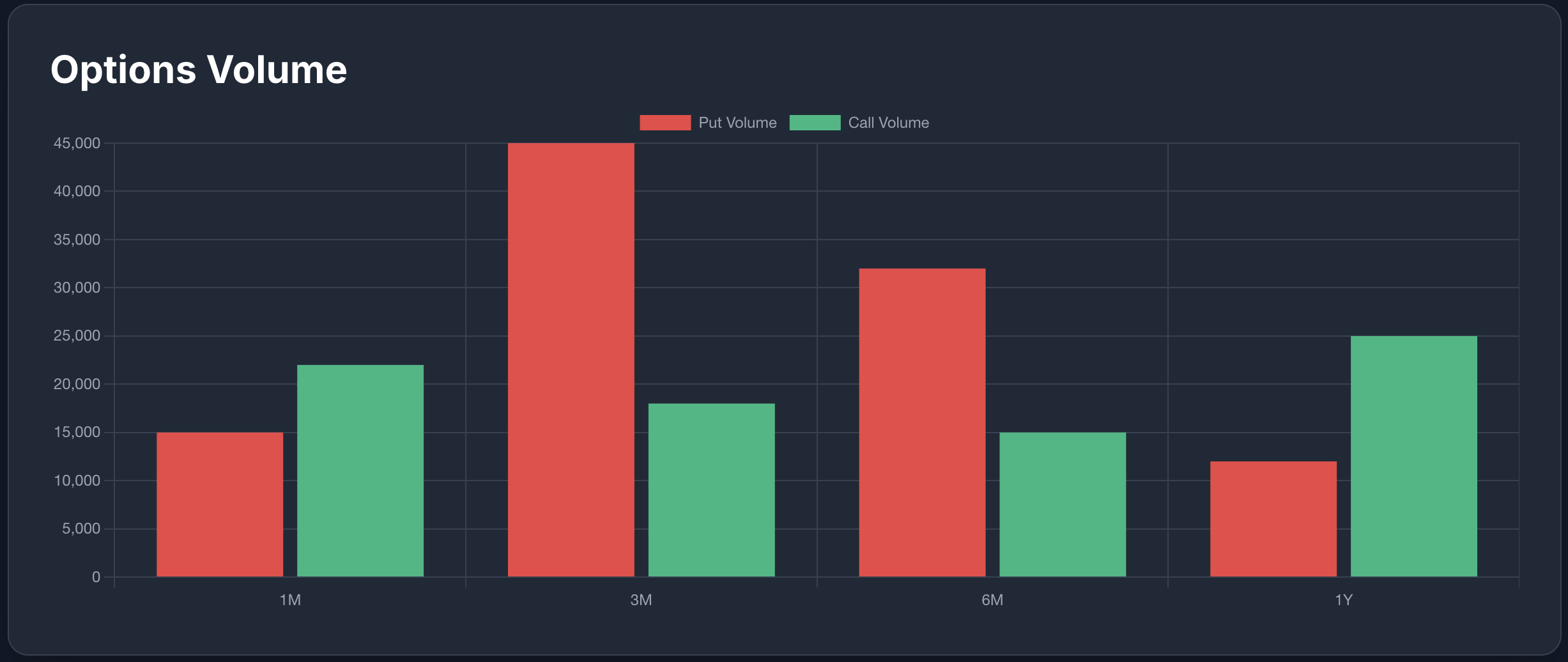
Look at the 3-month and 6-month bars. See how Put volume (red) dominates?
That's not retail traders making directional bets. That's structural hedging demand from miners.
Meanwhile, Call volume (green) is higher in 1-month and 1-year expirations. Those are speculators betting on short-term pumps or long-term bull markets.
But the 3-6 month window? That's miner territory. And it's dominated by Puts.
The Dealer Hedge: Why This Affects Spot Price
Here's the part most people miss:
When miners buy Puts, someone has to sell them those Puts. Usually, it's market makers (dealers).
But dealers don't want to take naked risk. So when they sell Puts to miners, they hedge their exposure by shorting Bitcoin futures.
This creates selling pressure in the spot market.
So miner hedging doesn't just affect options prices—it affects Bitcoin's spot price too.
When miners are aggressively buying Puts, dealers are aggressively shorting futures to hedge. This can push Bitcoin's price down, creating a self-fulfilling prophecy.
How to Trade This
If you want to use this information, here's a simple framework:
Step 1: Monitor Hash Rate
Use a site like Blockchain.com or Glassnode to track Bitcoin's hash rate. If it's rising rapidly while price is flat or falling, miners are getting squeezed.
Step 2: Check Put Skew
Look at 3-month and 6-month Put/Call skew. If Puts are trading at significantly higher IV than Calls, miners are hedging.
Step 3: Decide Your Trade
- Contrarian Play: Sell Puts to miners. Collect the inflated premium. Bet that their fear is overblown.
- Momentum Play: If skew is extreme, wait for capitulation. When miners are most scared, the bottom is often near.
- Hedging Play: If you're long Bitcoin, use the elevated Put prices to buy cheaper protection than usual (relative to Calls).
The Capitulation Signal
Here's the most important thing to understand:
Extreme Put skew often marks a bottom.
Why? Because when miners are paying massive premiums for downside protection, it means they're terrified. They're locking in floors, accepting losses, preparing for the worst.
But that level of fear is usually wrong.
Markets don't crash when everyone's already hedged. They crash when no one's prepared.
So when you see Put skew at extreme levels—when miners are paying 80% IV for Puts while Calls are at 50% IV—that's often a capitulation signal.
The bottom is near.
Real-World Example: The 2022 Miner Capitulation
In mid-2022, Bitcoin dropped from $40,000 to $20,000. Hash rate was at all-time highs. Miners were getting crushed.
Put skew went parabolic. Miners were paying insane premiums for 3-month Puts, desperate for protection.
And what happened?
Bitcoin bottomed at $17,500 in November 2022. The extreme Put skew marked the exact bottom of the bear market.
Traders who sold Puts to miners at inflated prices made a fortune. Traders who bought Bitcoin when Put skew was extreme caught the bottom.
Why Blockskew Tracks This
At Blockskew, we don't just show you options data. We show you the story behind the data.
We track:
- Hash rate trends to identify miner stress
- Put/Call skew across all expirations
- Open interest concentration to see where miners are positioning
- Dealer hedging flows to understand spot market pressure
Because understanding who is trading and why is just as important as knowing what the price is.
The Bottom Line
Bitcoin mining isn't just about hash power and electricity. It's about financial survival.
And when miners fight to survive, they use options to hedge. That hedging creates skew. That skew creates opportunities.
If you're trading Bitcoin options and you're not watching the hash rate, you're missing the signal.
Because the miners aren't just mining Bitcoin. They're mining volatility. And that volatility shows up in the options market every single day.
Watch the hash rate. Watch the skew. Trade the fear.